Precautions to Take When Using Siliconized Sealant
Siliconized sealant is one of the most frequently preferred materials for joint and gap filling in the construction industry. However, if not applied correctly, its performance can decrease, and sealing and durability problems may arise. This article will detail all the important points to consider when using siliconized sealant.
Surface Preparation
Successful sealant application is based on proper surface preparation. Points to consider:
- The joint or surface must be clean, dry, and free of dust.
- Old mastic residue must be completely removed.
- The surface must be free of oil, dirt, or moisture.
Mastic Selection
When choosing a silicone sealant, the application area and intended use should be taken into consideration.
- For areas exposed to water, such as bathrooms, kitchens, or exterior walls, waterproof products should be preferred.
- For areas with high UV exposure, products with high UV resistance should be selected.
- Color harmony and aesthetic appearance should be taken into consideration.
Application Technique
Things to keep in mind during application:
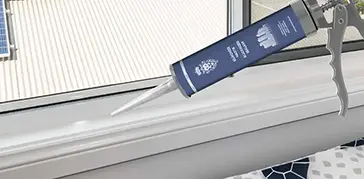
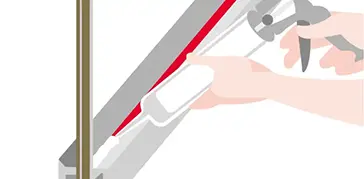
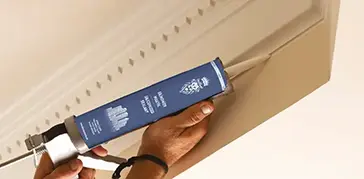
- The gun's angle and speed must be controlled; a 45-degree angle is ideal.
- The sealant must completely fill the joints and prevent air bubbles from forming.
- After application, the surface should be smoothed with a spatula or slightly damp finger.
- Excess product should be cleaned off, and if masking tape was used, it should be removed after drying.
Curing Time and Environmental Conditions
- The surface should not be touched until the sealant is completely dry.
- Drying time may vary depending on ambient temperature, humidity, and joint depth.
- In outdoor applications, wind and UV radiation can affect drying time.
Common Mistakes and Their Solutions
- Insufficient surface cleanliness → Prevents adhesion. Solution: Check for cleanliness and dryness.
- Incorrect gun usage → Uneven filling and air bubbles. Solution: Constant speed and angle.
- Failure to adhere to the curing time → The sealant deforms. Solution: Cure according to the manufacturer's instructions.
- Choosing the wrong product → Reduced performance. Solution: Selecting the appropriate sealant for the application area.
Tips
- Joint width and depth must be measured accurately.
- Clean edges can be ensured with masking tape.
- All surface preparation must be completed thoroughly before application.
- Drying time and environmental conditions must be taken into consideration.
- Elasticity and water resistance should be checked.
Conclusion
In silicone sealant applications, the points to be considered are critically important for both sealing and durability. By paying attention to proper surface preparation, appropriate product selection, controlled application, and drying time, you can achieve long-lasting and safe results.
The information in this text may vary from time to time depending on the manufacturer. Always check the product label.