Methods for Renewing Old Joints with Siliconized Sealant
Over time, joints in bathrooms, kitchens, and exterior walls can age, crack, or leak. Renewing old joints with silicone sealant restores both aesthetic appeal and water and air tightness. This article will discuss step-by-step methods and important considerations for renewing old joints.
Evaluation of Old Joints
It is important to assess the condition of old joints before replacing them:
- Is there any cracking, tearing, or deformation on the joint surface?
- Is there a water leak or moisture problem?
- Can the old sealant be easily removed from the surface?
This assessment is critical for proper preparation and appropriate product selection prior to application.
Step-by-Step Renovation of Old Grout
1. Removing Old Sealant
The old sealant must be completely removed. A cutter or spatula can be used for this. The joint surface should be cleaned, leaving no dust, dirt, or oil residue.
2. Surface Preparation
The joint surface must be dry and, if necessary, smoothed with light sandpaper. This improves the adhesion of the new sealant.
3. Using Masking Tape
Masking tape can be applied to protect the joint edges. This ensures a clean and neat appearance.
4. Sealant Application
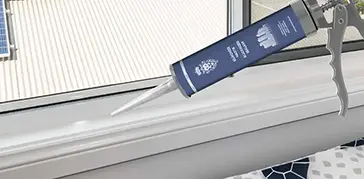
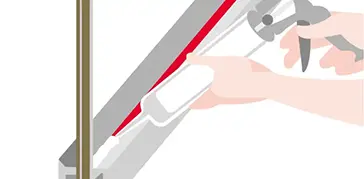
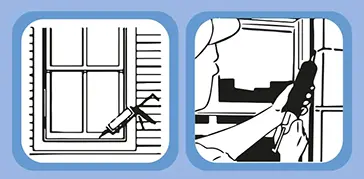
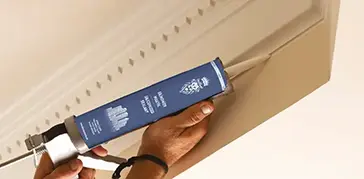
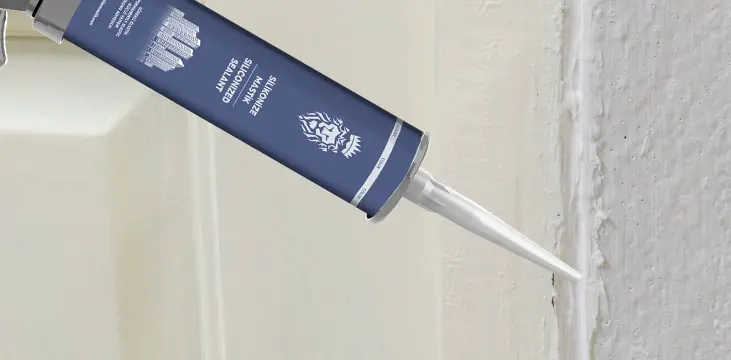
The new silicone sealant should be applied evenly to the joint using a sealant gun. Important considerations:
- The joint must be completely filled.
- No air bubbles should form.
- The gun must be moved in a controlled and steady manner.
5. Surface Leveling and Cleaning
After applying the sealant, the surface is smoothed with a spatula or slightly damp finger. Excess sealant should be cleaned off, and the masking tape should be removed after drying.
6. Curing Period
The joint or surface should not be touched until the sealant is completely dry. Drying time varies depending on the joint width, depth, and environmental conditions.
Common Mistakes and Their Solutions
- Leaving old sealant residue: Prevents adhesion. Solution: All old sealant must be removed.
- The surface is not clean enough: The new sealant will not adhere properly. Solution: Clean and dry the surface thoroughly.
- Incorrect gun usage: Causes uneven filling. Solution: Use the gun at a constant speed and angle.
- Failure to observe the curing time: The sealant will deform. Solution: Observe the curing time.
Tips
- The old sealant must be completely removed.
- The surface must be clean and dry.
- Clean edges should be ensured with masking tape.
- Control the gun angle and speed.
- Wait for the institution to dry in accordance with the prescribed time.
Conclusion
Renewing old joints with silicone sealant is important both aesthetically and functionally. By paying attention to proper surface preparation, appropriate application technique, and drying time, long-lasting and durable joints can be achieved.
The information in this text may vary from time to time depending on the manufacturer. Always check the product label.