How to Fill Joints and Gaps with Siliconized Sealant?
Joint and gap filling is critically important for the durability and aesthetics of structures. Siliconized mastic is ideal for these applications thanks to its flexible structure and strong adhesion properties. In this article, we will examine in detail the steps and tips for filling joints and gaps with siliconized mastic.
Why are Joint and Gap Fillings Important?
Joints are gaps that form at the connection points of different structural elements. These gaps can shift over time and allow water, moisture, or air to pass through. Therefore, joints need to be filled with a suitable material. Siliconized mastic, thanks to its elastic structure, completely fills these gaps and provides a watertight seal.
Pre-Application Preparation
Surface preparation is crucial for a successful joint and gap filling application. The following steps should be followed:
- Surface cleaning: Joints and gaps must be free of dust, dirt, and grease.
- Dryness check: The surface must be completely dry.
- Masking tape: You can use tape to protect the edges; this provides a cleaner look.
- Joint width: The width and depth of the joint must be measured, and the appropriate sealant and technique must be determined.
Step-by-Step Joint and Gap Filling
1. Preparing the Sealant Cartridge
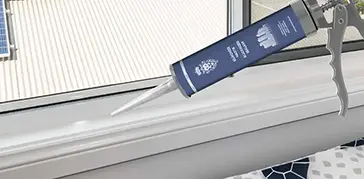
Trim the tip of the sealant cartridge to match the width of the joint and insert it into the gun. The tip cut ensures that the sealant flows evenly across the joint.
2. Applying Sealant
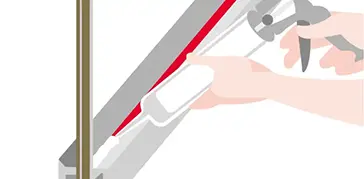
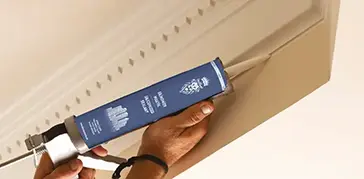
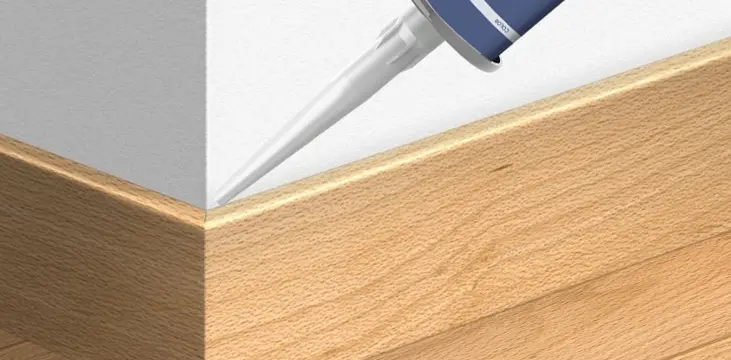
Hold the gun at a 45-degree angle and apply the sealant evenly to the joint. Important points to note:
- The joint must be completely filled.
- No air bubbles should be left.
- Move the gun steadily and in a controlled manner.
3. Surface Smoothing
After applying the sealant, smooth the surface using a spatula or your fingers. Using a slightly damp spatula during smoothing prevents the sealant from sticking to the surface and ensures an aesthetically pleasing finish.
4. Cleaning Up Excess Product
Excess sealant overflowing from the joint edges should be removed with a damp cloth or spatula. If masking tape was used, the edges should appear clean and smooth after the tape is removed.
5. Curing Period
The surface should not be touched until the sealant is completely dry. Drying time depends on ambient conditions and should be determined according to the manufacturer's instructions.
Common Mistakes and Their Solutions
- Insufficient surface cleanliness: Prevents adhesion. Solution: Clean and dry the surface.
- Incorrect gun usage: Air bubbles and uneven filling occur. Solution: Use the gun at a constant speed and angle.
- Failure to observe the curing time: The sealant will deform. Solution: Observe the curing time.
- Incorrect joint width: Insufficient sealant. Solution: Measure the joint width correctly and use the appropriate sealant.
Tips
- Measure the joint width before applying the sealant and cut the correct edge size.
- Lightly moisten the spatula during the correction process.
- Achieve clean edges with masking tape.
- Plan the drying time according to the manufacturer's instructions.
Conclusion
Joint and gap filling with silicone-based sealant, when done with the correct technique and application, provides a long-lasting and durable result. By paying attention to surface preparation, sealant application technique, surface leveling, and drying time, you can achieve aesthetically pleasing and watertight applications.
The information in this text may vary from time to time depending on the manufacturer. Always check the product label.