Can Siliconized Sealant Be Used Outdoors? What You Need to Know.
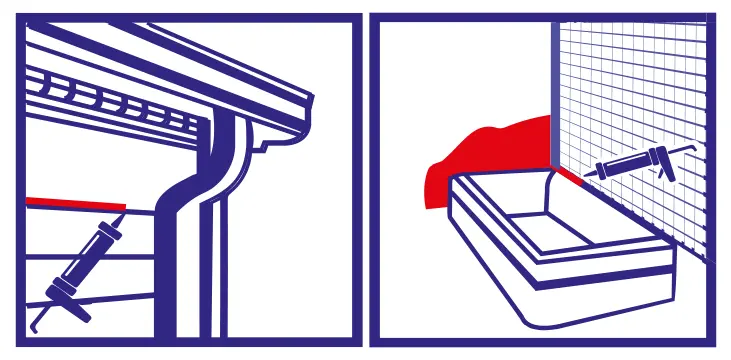
Siliconized sealant, thanks to its elastic structure and durability, can be used in both indoor and outdoor applications. However, outdoor applications require careful selection and application as they involve different environmental conditions and challenges. In this article, we will examine the outdoor use of siliconized sealant, its advantages, and application tips in detail.
Advantages of Siliconized Sealant for Outdoor Use
- UV Resistance: Prevents color fading and material degradation in areas exposed to sunlight.
- Weather Resistance: Provides resistance to external factors such as rain, wind, snow, and humidity.
- Elastic Structure: Adapts to the movements of structural elements caused by temperature changes.
- Waterproofing: Prevents water ingress at exterior joints and glass connections.
Preparation Before Outdoor Use
- Surface Preparation: Exterior surfaces, glass or aluminum frames must be clean, dry and free of grease.
- Joint Inspection: Joint width and depth must be accurately measured, and the appropriate sealant selected.
- Masking Tape: Used to protect edges and ensure a clean application.
Step-by-Step Outdoor Application
1. Preparing the Sealant Cartridge
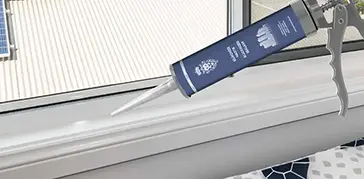
The tip of the cartridge should be cut to match the width of the joint and inserted into the gun. This ensures an even and controlled flow of sealant.
2. Applying Sealant
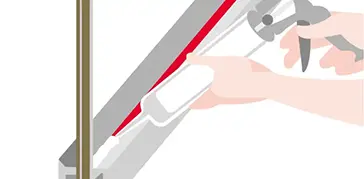
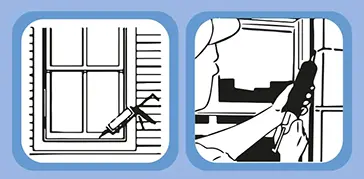
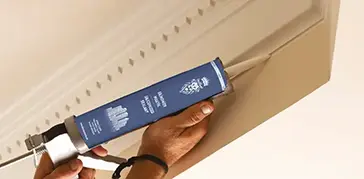
The gun should be held at a 45-degree angle and the sealant should be applied evenly to the joint. Important points to note:
- The joint must be completely filled.
- No air bubbles should form.
- The gun should be moved in a steady and controlled manner.
3. Surface Smoothing
The surface should be smoothed with a spatula or a slightly damp finger. This ensures an aesthetically pleasing and even appearance.
4. Cleaning Up Excess Product
Excess sealant overflowing from the joint edges should be removed with a damp cloth or spatula. If masking tape was used, it should be removed after drying.
5. Curing Period
Drying time may be longer for outdoor applications than for indoor applications. Temperature, humidity, and wind speed affect drying time. The sealant should not be touched until it is completely dry.
Common Mistakes and Their Solutions
- Incorrect product selection: Sealants unsuitable for outdoor conditions should not be used. Solution: Choose a product with high UV and weather resistance.
- Insufficient surface cleanliness: Prevents adhesion. Solution: Clean and dry the surface.
- Incorrect gun usage: Air bubbles and uneven filling occur. Solution: Use the gun at a constant speed and angle.
- Failure to adhere to the drying time: The sealant will deform. Solution: Allow it to dry according to the manufacturer's instructions.
Tips
- Choose the appropriate sealant for outdoor applications.
- Pay attention to the width and depth of the joints.
- Plan the drying time according to environmental conditions.
- Achieve clean edges with masking tape.
- Use the gun's angle and speed in a controlled manner.
Conclusion
Siliconized sealant offers a long-lasting and reliable solution for exterior applications thanks to its UV resistance, weather resistance, and elastic structure. With the right product selection, surface preparation, and application technique, exterior facade joints, glass joints, and other gaps can be effectively protected.
The information in this text may vary from time to time depending on the manufacturer. Always check the product label.